


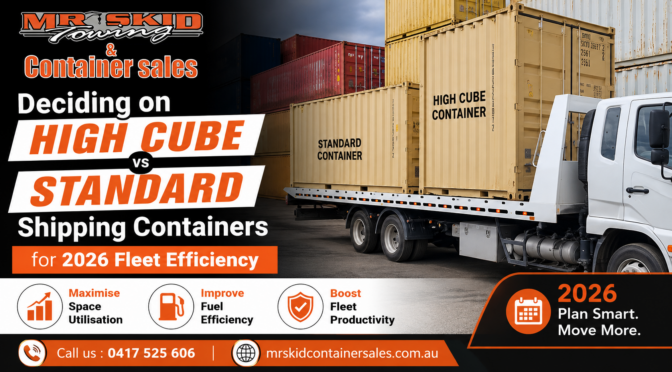
Choosing between high cube and standard shipping containers seems like a simple decision. However, this choice dramatically impacts your fleet efficiency and operational costs. Getting it wrong wastes money and storage space unnecessarily. Understanding both container types helps you make smarter choices for 2026.
Why Container Type Matters for Your Fleet
Your container choice affects three critical areas directly. First, it changes how much cargo you can store safely. Second, it influences your fuel consumption and transport expenses. Third, it shapes your overall logistics management strategy for the year.
What Is a Standard Shipping Container?
Standard containers are the traditional option for cargo transportation. They measure 20 or 40 feet in length, typically. The height is eight feet six inches, approximately. These containers work well for most common shipping needs. They’re the industry’s most widely available and affordable option.
Key benefits include:
- Lower purchase and rental costs overall
- Excellent intermodal transport compatibility
- Simple stacking and storage in yards
- Proven durability over many decades
Understanding High Cube Shipping Containers
A high-cube shipping container offers significantly more vertical space inside. These containers are one foot taller than standard versions. Height reaches nine feet six inches approximately. Extra space enables better cargo organisation and protection. Businesses use them for lightweight, high-volume items, especially.
Key advantages include:
- Increased storage capacity without more floor space
- Better weight distribution for bulky goods
- Reduced shipping trips for certain cargo types
- Improved warehouse efficiency and productivity
When selecting containers, many operations now favour shipping containers in Brisbane for their fleet expansion projects. The choice depends entirely on your specific requirements.
Cost Comparison and ROI Analysis
Standard containers remain more economical upfront. Purchase prices are significantly lower initially. Operating costs also decrease with standard options. However, high cube containers may offer better long-term value for certain industries.
Calculate your break-even point carefully. Consider how many extra trips standard containers need. If high cube containers reduce necessary shipments, savings multiply quickly. Return on investment timelines vary widely between businesses.
Operations seeking expansion sometimes discover that shipping containers in Gold Coast prove ideal for testing both container types. Trial periods help determine which suits your operations best.
Fleet Efficiency Metrics to Consider
Weight distribution impacts fuel efficiency significantly. Standard containers suit heavier cargo better, typically. High cube containers work best with lighter loads. Uneven weight causes poor fuel economy performance.
Storage density is another critical metric. High cube containers maximise warehouse utilisation substantially. Standard containers require more ground space usually. Your available space determines which option works better.
Decision Framework for 2026 Operations
Ask yourself these important questions first:
- What cargo types does your fleet transport regularly?
- Is available warehouse space limited or abundant?
- What’s your typical load weight per shipment?
- How many trips occur annually on average?
- What’s your total annual budget allocation?
Many expanding operations utilising shipping containers in Ipswich find mixed fleets work best. Combining both types optimises performance across different cargo scenarios.
Industry Trends and Future Outlook
The industry increasingly favours hybrid container solutions for maximum flexibility. Mixed fleets reduce operational constraints significantly. Technology improvements are making tracking more efficient. Sustainability concerns favour high cube containers increasingly.
Shipping containers in Toowoomba represent growing demand for diverse container options. Planning now ensures you’re ready for future needs.
Implementation Tips for Maximum Efficiency
Start by auditing your current shipping patterns thoroughly. Document cargo types, weights, and volumes systematically. Analyse seasonal variations in your transportation needs. Consult with your logistics team about preferences.
Test both container types before committing financially. Monitor operational metrics during trial periods carefully. Track fuel consumption, handling time, and storage costs. Data-driven decisions reduce costly mistakes significantly.
Conclusion
Selecting between high-cube shipping container options and standard types requires careful analysis. Your decision shapes operational success throughout 2026. Consider your cargo profile, space constraints, and budget carefully. Both container types offer distinct advantages for different applications.
Ready to optimise your fleet for peak efficiency? Contact Mr Skid Towing & Container Sales today for expert guidance. Call 0417 525 606 or email mrskidcontainersales.au@gmail.com. Visit https://mrskidcontainersales.com.au/ for detailed container specifications and current availability. Our experienced team helps you choose the perfect solution for your fleet needs.
Frequently Asked Questions
1. Which container type costs more initially?
Standard containers are more affordable upfront. High cube containers cost approximately 10–15% more initially, but may offer better value long-term depending on your cargo type.
2. Can I stack high cube containers safely?
Yes, both types stack safely when properly loaded. However, weight distribution becomes more important with high cube containers due to their height advantage.
3. Which container is best for general cargo?
Standard containers suit most general cargo needs. They’re widely compatible with shipping infrastructure across industries and transport methods.
4. How much extra space does high cube provide?
High cube containers provide approximately 1,172 cubic feet. Standard containers offer about 1,072 cubic feet, making high cube roughly 9% larger in volume.
5. Do shipping routes accept both container types?
Yes, both types are accepted on standard shipping routes. However, certain destinations have specific container preferences based on port facilities.
6. What cargo suits high cube containers best?
Lightweight, high-volume items like textiles, electronics, and foam products suit high cube containers. Anything requiring maximum space with minimal weight works ideally.
7. Are standard containers more durable overall?
Both types are equally durable when properly maintained. Durability depends more on maintenance schedules than on container type fundamentally.
8. Can I convert a standard container to a high cube?
No, structural modifications of this nature aren’t recommended. It’s safer and more economical to purchase containers designed for your needs.
9. Which saves more money on fuel consumption?
Standard containers typically reduce fuel costs due to lighter structural weight. However, fewer high-cube trips might offset this advantage for certain operations.
10. How do I decide which type to purchase?
Analyse your typical cargo weight, volume, and frequency patterns thoroughly. Consult with logistics professionals about your specific operational requirements and constraints.