


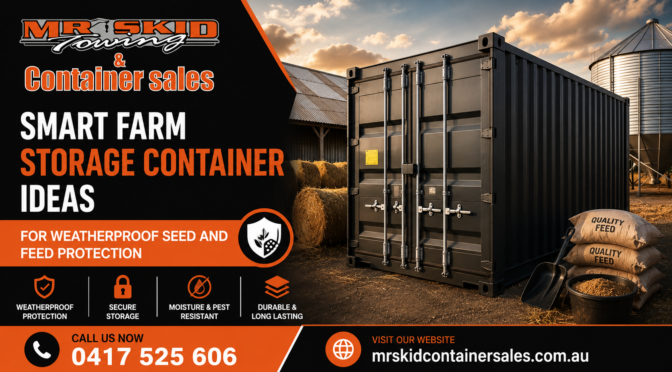
Protecting your seeds and feed from harsh weather is essential. Farmers face constant challenges keeping supplies safe and dry. Poor storage conditions damage valuable crops and increase costs unnecessarily. Smart farm storage container ideas offer reliable, weather-resistant solutions for modern agriculture.
Why Weatherproof Storage Matters for Farmers
Agricultural storage protection prevents crop loss and maintains quality effectively. Moisture, pests, and temperature fluctuations destroy seeds and feed quickly. Proper containers keep your supplies safe throughout every season. Investing in weatherproof solutions saves money long-term.
Key Features of Effective Farm Storage
Look for these important characteristics in any container:
- Waterproof seals — Keeps moisture and rain completely out
- Ventilation systems — Allows air circulation without letting water in
- Durable materials — Withstands extreme temperatures and harsh conditions
- Pest-resistant design — Prevents rodents and insects from entering
- Easy accessibility — Quick access for regular feed and seed management
Smart Container Solutions for Farm Protection
Understanding Container Options
Shipping container for farm storage provides excellent durability and weather protection. These containers resist rust, corrosion, and severe temperature changes efficiently. Their sturdy construction protects valuable agricultural supplies for years reliably.
Preparation and Maintenance Tips
Before storing supplies, prepare your container thoroughly:
- Install proper insulation materials to regulate internal temperatures
- Add moisture-absorbing products throughout the storage space
- Use raised flooring to prevent groundwater damage
- Seal all gaps and cracks completely before use
- Implement regular inspections for wear and damage
Finding Quality Storage Containers for Sale
When selecting containers, prioritise quality and durability above all else. Reputable suppliers offer containers meeting strict agricultural standards. Look for options providing weatherproof guarantees and reliable support services. Quality containers protect investments better than cheaper alternatives.
Working with a Reliable Shipping Container Supplier
Choosing the right shipping container supplier ensures you receive quality containers. Professional suppliers offer expert advice on container selection. They help match specific needs with appropriate storage solutions. Excellent suppliers provide ongoing maintenance support and guidance.
Maximising Your Farm Storage Investment
Organise your container strategically to optimise space usage. Label all stored items clearly for easy identification. Rotate stock regularly using the first-in, first-out method. Monitor temperature and humidity levels consistently throughout storage periods.
Additional Smart Storage Strategies
Environmental management keeps contents protected effectively. Store seeds separately from feed to prevent contamination. Maintain consistent temperatures between 10–15 degrees Celsius if possible. Keep humidity levels below 65% for optimal preservation.
Conclusion
Smart shipping containers for farm storage solutions protect your agricultural investments effectively. Weatherproof containers ensure seeds and feed remain safe year-round. Proper storage prevents costly losses and maintains supply quality consistently.
Ready to upgrade your farm storage today? Contact Mr Skid Towing & Container Sales for expert guidance. Our team provides comprehensive storage solutions tailored specifically for your needs. Call now on 0417 525 606 or email mrskidcontainersales.au@gmail.com for friendly advice. Visit our website at https://mrskidcontainersales.com.au/ to explore all available options today.
Frequently Asked Questions
1. How long do weatherproof farm containers last?
Quality containers typically last 25–30 years with proper maintenance. Regular inspections and upkeep extend their lifespan significantly.
2. What’s the best temperature for seed storage?
Keep seeds between 5–15 degrees Celsius for optimal preservation. Consistent temperatures prevent germination problems and maintain viability longer.
3. Can I modify storage containers for ventilation?
Yes, professional modifications include adding ventilation systems safely. Always ensure modifications don’t compromise weatherproofing or structural integrity.
4. How often should I inspect storage containers?
Inspect containers monthly for signs of damage or wear. Regular checks prevent small problems from becoming expensive issues later.
5. What moisture control solutions work best?
Silica gel, calcium chloride, and desiccant packs work effectively. Replace moisture absorbers every 2–3 months for best results.
6. Are containers safe for different feed types?
Yes, but keep different types separated to prevent contamination. Use dividers or separate sections for various feed varieties.
7. How do I prevent pest entry into containers?
Seal all cracks, gaps, and openings completely before storage. Install pest-resistant doors and check seals regularly.
8. What’s the cost-benefit of quality containers?
Quality containers prevent crop losses worth far more than the investment. They protect supplies for decades, offering excellent long-term value.
9. Can used containers work for farm storage?
Used containers can work if thoroughly cleaned and inspected. Ensure weatherproofing remains intact before storing valuable supplies.
10. Should I insulate storage containers?
Insulation helps maintain stable temperatures and reduces condensation significantly. It’s particularly beneficial in extreme climates.